

Center for Competitiveness logo
What We Do
Industries
About
Resources
Contact Search
Belfast | +44 (0)28 9073 7950
Dublin | +353 (0)8 7224 2575
What We Do
What We Do

We collaborate closely with organisations to understand their goals, identify barriers, and co-create tailored improvement programmes that deliver real impact.

Industries

Industries

Our work is built on real-world experience across industries including manufacturing, aerospace, services, hospitality, tourism, and the public sector.

About

About

We empower organisations across Ireland to build a competitive advantage in a global marketplace.

Resources
Resources

Explore our Resources to find the tools, insights, and expertise that drive real change.

Board Member Spotlight: Trevor Lockhart
seperator

Profile

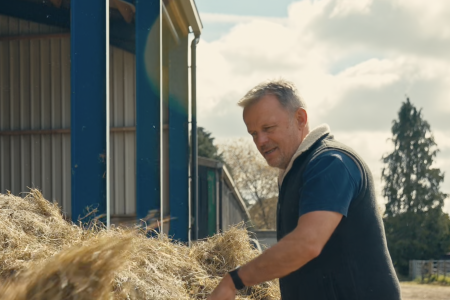
Having grown up on the family farm in County Armagh Trevor has remained close to his countryside roots. Since 2007 he has led the strategic development of Fane Valley Co-operative. The farmer owned business, which will celebrate its 125-year anniversary in 2028, annually produces over 500,000 tonnes of animal feed, rears and processes 5m ducks, manufactures 30m packs of porridge and processes and packs 1.3bn eggs to mention just some of what the co-operative does!  

Prior to being appointed as CEO, Trevor led the development and delivery of business development/improvement projects at Fane Valley. In his earlier career he held agricultural policy and communications roles with the Ulster Farmers’ Union and gained international experience with Masstock Inc., Georgia, US.  

Passionate about the importance of agri-food to a successful Northern Ireland economy Trevor is actively involved in a range of industry and business organisations seeking to create the conditions for companies to grow sustainably.

What is the biggest competitiveness challenge facing organisations right now? 

The biggest competitiveness challenge facing companies/organisations is improving productivity while managing rising costs and skills shortages. The cost of doing business has escalated in recent years due to the combined impacts of war (including higher energy costs), geopolitical tensions and a range of national policies (such as the National Living Wage rising by 46% in 5 years and increased employer NIC contributions). Without proactive steps to counteract these pressures firms will find it harder to invest, expand and compete with businesses elsewhere. 

What are high-performing organisations doing differently? 

High-performing companies are succeeding by focusing on agility, innovation and people. Rather than competing on price alone, they invest in technology to improve productivity, use data to make faster decisions and continually develop the skills of their workforce. Successful organisations also foster strong leadership, empower employees to solve problems and embrace continuous improvement. By collaborating with customers, universities and industry partners as appropriate, they accelerate innovation and respond more quickly to changing market demands. This combination of operational excellence, adaptability and strategic investment enables them to outperform competitors despite economic uncertainty. 

Where should leaders focus over the next 12–24 months? 

Over the next 12-24 months, business leaders should focus on building more resilient, more productive and future-ready organisations. With current pressures unlikely to abate in the near-term businesses should look for smarter ways of working to maintain competitiveness. Priorities include accelerating automation, digital and AI adoption to improve efficiency, investing in leadership capability and workforce skills, and strengthening operational resilience against economic and geopolitical uncertainty.  

The organisations that succeed will be those that combine operational excellence and adaptability with strategic investment in people and technology.

Barbara Barbara
5th Oct 2026