
We collaborate closely with organisations to understand their goals, identify barriers, and co-create tailored improvement programmes that deliver real impact.
Our work is built on real-world experience across industries including manufacturing, aerospace, services, hospitality, tourism, and the public sector.
We empower organisations across Ireland to build a competitive advantage in a global marketplace.
Explore our Resources to find the tools, insights, and expertise that drive real change.

Profile
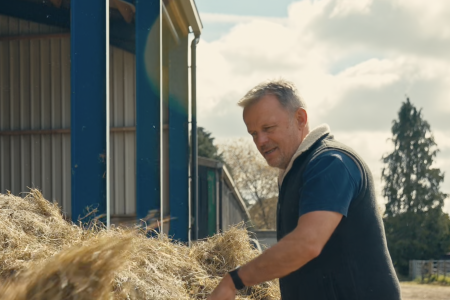
Having grown up on the family farm in County Armagh Trevor has remained close to his countryside roots. Since 2007 he has led the strategic development of Fane Valley Co-operative. The farmer owned business, which will celebrate its 125-year anniversary in 2028, annually produces over 500,000 tonnes of animal feed, rears and processes 5m ducks, manufactures 30m packs of porridge and processes and packs 1.3bn eggs to mention just some of what the co-operative does!
Prior to being appointed as CEO, Trevor led the development and delivery of business development/improvement projects at Fane Valley. In his earlier career he held agricultural policy and communications roles with the Ulster Farmers’ Union and gained international experience with Masstock Inc., Georgia, US.
Passionate about the importance of agri-food to a successful Northern Ireland economy Trevor is actively involved in a range of industry and business organisations seeking to create the conditions for companies to grow sustainably.
What is the biggest competitiveness challenge facing organisations right now?
The biggest competitiveness challenge facing companies/organisations is improving productivity while managing rising costs and skills shortages. The cost of doing business has escalated in recent years due to the combined impacts of war (including higher energy costs), geopolitical tensions and a range of national policies (such as the National Living Wage rising by 46% in 5 years and increased employer NIC contributions). Without proactive steps to counteract these pressures firms will find it harder to invest, expand and compete with businesses elsewhere.
What are high-performing organisations doing differently?
High-performing companies are succeeding by focusing on agility, innovation and people. Rather than competing on price alone, they invest in technology to improve productivity, use data to make faster decisions and continually develop the skills of their workforce. Successful organisations also foster strong leadership, empower employees to solve problems and embrace continuous improvement. By collaborating with customers, universities and industry partners as appropriate, they accelerate innovation and respond more quickly to changing market demands. This combination of operational excellence, adaptability and strategic investment enables them to outperform competitors despite economic uncertainty.
Where should leaders focus over the next 12–24 months?
Over the next 12-24 months, business leaders should focus on building more resilient, more productive and future-ready organisations. With current pressures unlikely to abate in the near-term businesses should look for smarter ways of working to maintain competitiveness. Priorities include accelerating automation, digital and AI adoption to improve efficiency, investing in leadership capability and workforce skills, and strengthening operational resilience against economic and geopolitical uncertainty.
The organisations that succeed will be those that combine operational excellence and adaptability with strategic investment in people and technology.
In engineering and manufacturing circles, Failure Mode and Effects Analysis (FMEA) is often viewed as a “box-ticking” exercise—a mandatory, tedious document required by auditors or customers. However, when treated as a mere administrative hurdle, FMEA loses its power.
To unlock the true value of an FMEA, a team must first define the strategic intent: why they are developing the FMEA. Without a clear objective, an FMEA becomes a shallow list of obvious problems rather than a rigorous tool that drives innovation, quality and safety.
An FMEA is more than a document; it is a problem-solving strategy. For manufacturing teams, the goal isn’t to have a completed spreadsheet to show an auditor or to send to a customer – it’s to have a more stable, safer, error-free and profitable operation. By defining the “Why” at the start, you transform the FMEA from a task into a competitive advantage. Teams will focus on improvement rather than the documentation process.
One approach is to ask, “What is the primary risk we are trying to mitigate today?” The answer usually falls into one of these categories:
When a manufacturing team agrees on the “Why”, the scoring process (Severity, Occurrence, and Detectability) becomes objective rather than generic and the reason of the analysis should dictate the depth and direction of the discussion. For example,
To help your team develop an effective FMEA, there are several considerations that are essential:
At the Centre for Competitiveness, we help build the internal capability required to implement FMEA within your organisation.
We facilitate sessions to review key concepts and help teams focus on how to link an FMEA activity to a strategic objective, how it relates to specific processes or operations, so that the FMEA can be used to engage people in a value-adding exercise that delivers results.
Our goal is simple:
Equip your teams with the practical skills and confidence to improve Safety, Quality, Productivity and Delivery every time.
The Farnborough International Airshow once again provided a fitting stage to celebrate the achievements of companies that continue to raise the bar for excellence within the aerospace and advanced manufacturing sectors. The Centre for Competitiveness (CforC) is delighted to recognise a number of organisations whose dedication to continuous improvement, quality and operational excellence has been rewarded through prestigious industry recognitions.
Achieving SC21 recognition is a significant accomplishment; retaining that recognition year after year is an even greater testament to organisational commitment, discipline and resilience. The Centre for Competitiveness warmly congratulates CCP Gransden, RTA International, Boyce Engineering, McGreevy Engineering and Bradfor Ltd on successfully retaining their SC21 certification.
Maintaining SC21 status requires organisations to continually demonstrate high standards of performance across quality, delivery, continuous improvement and customer satisfaction. These companies have shown that excellence is not a one-time achievement but an embedded way of working. Their continued success reflects strong leadership, engaged workforces and a sustained focus on improvement that strengthens both their businesses and the wider aerospace supply chain. CforC is proud to have supported each organisation on this journey and applauds the dedication and determination that have enabled them to consistently perform at such a high level.
The Farnborough International Airshow also marked an important milestone for three organisations that have successfully achieved SC21 certification for the first time. The Centre for Competitiveness extends its warmest congratulations to Springfort Engineering, CNC Tool and Die Ltd, and Raptor Photonics on attaining Bronze-level SC21 recognition.
Achieving this first level of recognition represents a significant accomplishment and reflects a strong commitment to excellence across key performance areas including quality, delivery, operational effectiveness, customer focus and continuous improvement. Reaching Bronze status is the culmination of considerable effort, teamwork and leadership, and demonstrates that these organisations have developed the foundations necessary to compete and succeed in increasingly demanding global markets. CforC has been privileged to work alongside these companies throughout their improvement journeys and is immensely proud of the perseverance and commitment they have demonstrated in reaching this important milestone.
Special recognition must be given to Moyola Precision Engineering for an outstanding accomplishment on the international stage. Moyola has achieved Aero Excellence Silver Level status, becoming only the third organisation worldwide to attain this prestigious level of recognition.
This remarkable achievement places Moyola among a highly select group of world-class manufacturers and reflects the company’s unwavering commitment to operational excellence, continuous improvement and sustainable business performance. Achieving Silver status requires a consistently high level of maturity across a broad range of business and operational practices, making this recognition a truly exceptional accomplishment.
The achievement is a tribute to the dedication, leadership and collective effort of the entire Moyola team. Their commitment to excellence has enabled the organisation to reach a benchmark recognised internationally and positions the company strongly for future growth and continued success.
The Centre for Competitiveness is delighted to have supported Moyola throughout this journey and is immensely proud to have played a role in helping the company reach this significant international milestone. Moyola’s success serves as an inspiration for other organisations aspiring to world-class performance and demonstrates what can be achieved through a sustained commitment to excellence.
Profile: Professor Sandra Moffett, Business Analytics at Ulster University
Professor Sandra Moffett is Professor of Business Analytics at Ulster University and a research-active member of the Business and Management Research Institute. She previously served as Head of the Department of Global Business and Enterprise (2018–2024) and most recently held the role of Interim Pro Vice-Chancellor and Executive Dean of Ulster University Business School.
Sandra’s career spans more than three decades across education, research, leadership and industry engagement. Since joining Ulster University in 2000, she has played a leading role in developing innovative programmes in Business Analytics, International Business, Food and Drink Innovation, and International Accounting with Analytics. She has also led major strategic initiatives focused on widening participation, regional economic development and business-university collaboration.
An internationally recognised researcher in knowledge management, business intelligence and business analytics, Sandra has produced more than 125 academic publications and has secured significant research funding from organisations including CIMA, the British Council, the Royal Society and European funding programmes. Her work has supported organisations across the private, public and third sectors to improve decision-making, innovation and organisational performance.
She has extensive experience working with industry through Knowledge Transfer Partnerships, FUSION projects, Innovation Vouchers and Digitalisation Boost initiatives, helping organisations harness data, analytics and digital technologies to enhance competitiveness and growth.
The greatest challenge facing organisations today is transforming data and digital investments into measurable business value. While many organisations are investing heavily in digital technologies, analytics and AI, success depends on having the skills, leadership and organisational culture needed to convert information into effective decision-making and innovation.
Many organisations possess large volumes of data but struggle to unlock its full potential. The challenge is no longer simply collecting information; it is creating the capability to analyse, interpret and act upon insights quickly enough to support strategic decision-making and sustainable growth.
High-performing organisations place data, analytics and continuous learning at the centre of their decision-making processes. They invest not only in technology, but also in developing people, leadership capability and collaborative networks that enable innovation to flourish.
These organisations recognise the value of partnerships between industry, academia and government. By embracing innovation, fostering knowledge sharing and adopting evidence-based approaches to decision-making, they are better positioned to respond to changing market conditions and emerging opportunities. They also understand that digital transformation is not solely a technology project—it is an organisational change programme that requires engagement from all levels of the business.
Leaders should focus on building organisational capability in data literacy, analytics and digital innovation. As technology evolves rapidly, developing the knowledge and confidence of employees will be essential for ensuring organisations can respond effectively to future challenges and opportunities.
Investment should also be directed towards strengthening regional innovation ecosystems, fostering collaboration between industry and academia, and creating pathways that support entrepreneurship, commercialisation and sustainable economic growth
Finally, leaders should continue to prioritise the responsible adoption of emerging technologies, ensuring that innovation delivers meaningful benefits for organisations, employees and society as a whole.
New research highlights a significant gap between having data and using it to generate insight.
Businesses have access to more data than ever before. But having data and making effective use of it are two very different things.
New findings from the UK Government’s Business Data Survey 2026 highlight the scale of the opportunity. The survey found that 86% of UK businesses handle digitised data, rising to 93% among businesses with employees.
Yet only 25% of businesses that handle digitised data say they analyse it to generate new insights or knowledge.
The gap is particularly striking in sectors such as manufacturing, construction and energy. Only 12% of manufacturing businesses and 11% of businesses in mining, energy and water reported analysing data to generate new insights or knowledge.
From data to insight
The findings raise an important question for organisations:
If your business already has the data, are you using it to understand what is happening – or to decide what happens next?
Most organisations routinely use data to report performance.
– Sales increased.
– Costs fell.
– Productivity changed.
– Quality improved.
– Customer complaints reduced.
This information is important. But it primarily tells us about the past.
The greater opportunity is to use data to identify emerging trends, risks, opportunities and relationships – and to give people better evidence for the decisions they need to make now.
The need to build these capabilities is becoming more urgent as artificial intelligence becomes increasingly accessible.
In Ireland, the latest Central Statistics Office data shows that 20.2% of enterprises were using AI in 2025, up from 15.2% in 2024. More than a quarter of Irish enterprises were also using transaction records for data analytics.
In the UK, the latest Office for National Statistics analysis shows that businesses are most commonly developing AI capability by training or retraining existing employees. Yet only 11% of businesses with 10 or more employees reported that more than half of their workforce had received AI-related training.
This points to an important distinction.
AI can process enormous amounts of information. It can identify patterns, summarise information and support analysis.
But it does not remove the need for people who can ask whether the underlying data is reliable, understand what the information means, challenge the conclusions and decide what action should follow.
Building the capability to use data
For organisations looking to become genuinely data-driven, the challenge isn’t necessarily collecting more information or investing in more sophisticated technology.
It is developing the capability to turn:
Data → Insight → Decision → Action
That means helping people understand the data available to them, ask better questions, recognise meaningful patterns and use evidence confidently within their own roles.
At the Centre for Competitiveness, our tailored Data Literacy Programme helps organisations develop these practical capabilities, connecting data skills to real business challenges and decision-making.
Your data tells you what happened. Can it help you decide what’s next?
We explore this question in more detail in our latest Knowledge Hub article:
Is your organisation using data to report performance — or to shape what happens next?
Talk to us about our tailored Data Literacy Programme. Contact us.
Profile: Andrew Kirke, Partner at Tughans
Andrew Kirke is a Partner in Tughans’ commercial team, advising clients across commercial and regulatory matters, with a particular focus on the energy, technology and clean tech sectors. He is qualified across the UK and Ireland and regularly advises clients on a range of matters including technology contracts, software licence agreements, power purchase agreements, grid connection agreements or similar commercial arrangements. He joined Tughans around 15 years ago, after working offshore as a corporate finance lawyer, chairs the CBI Energy Working Group for Northern Ireland, is a member of Mutual Energy, and has twice been seconded to SONI Limited, the transmission system operator for Northern Ireland.
The organisations that will thrive are those that treat energy, technology and operational performance as one strategic conversation.
There’s no single answer that applies neatly to every sector, as every business faces different challenges, but looking through an energy and industrial lens, some particular challenges right now are high localised costs in a global marketplace, particularly high energy costs and labour costs, leading to a global competitiveness problem particularly in the manufacturing space.
Manufacturers are being asked to invest for the long term while operating under significant short-term pressure. A joint report from Make UK and Ecotricity published this week found that industrial electricity costs are now threatening investment, competitiveness and in some cases, the survival of British factories, with13% of manufacturers warning further price shocks could be terminal for their operations. UK and Ireland industrial electricity prices have been identified as among the highest in Europe and the G7, even after exemptions and compensation schemes are taken into account.
In Ireland, SEAI data for the first half of 2025 put average business electricity prices at 24.27 cent per kWh, compared with 17.87 cent per kWh for the EU-27. That differential matters when boards are deciding where to invest, where to expand and where to automate. The coupled pressure point is increasing labour costs and pressures to automate (which requires increased electricity consumption and CAPEX). Deployment of robotics in the manufacturing space is accelerating, with one report saying that Asia accounts for 74% of new deployments whereas Make UK ranks the UK as 24th in global robotics density.
Whilst very much being a professional advisor looking at this from the outside in terms of this particular issue, it seems that high-performing organisations are treating energy, technology and operational performance as one conversation and a key strategic conversation.
We see a number of companies doing interesting behind the meter projects, as well as implementing extremely efficiency measures based on very granular data around things like half-hourly consumption, peak demand, production scheduling, heat requirements and avoidable waste. The same discipline applies to automation. There are a few companies in Northern Ireland identifying repeatable, labour-intensive processes, and testing whether automation improves margins and scalability.
Developing a short, prioritised capex roadmap looking at which investments protect competitiveness over the next five to ten years.
Projects with longer payback might still be the right decision if businesses are reducing exposure to volatile wholesale pricing, addressing workforce constraints or creating capacity for growth or scaling output. I see those organisations connecting energy strategy, operational improvement and global competitiveness as hopefully surviving and thriving through what are no doubt going to be more turbulent years for the manufacturing sector here.
I see that as being an area where the Centre for Competitiveness can really assist.
The Centre for Competitiveness, in association with Causeway Coast and Glens Borough Council, is progressing a feasibility study to assess the potential for biomethane gas to support the decarbonisation of transport and logistics across the Borough.
This initiative is focused on helping businesses address Scope 3 emissions and transition towards more sustainable operations.
We are currently seeking expressions of interest from 8–10 businesses, with a particular focus on SMEs, to participate in a collaborative study. By taking part, organisations will:
– Contribute to shaping a potential cluster-based biomethane supply network
– Explore opportunities to reduce emissions and fuel costs
– Gain access to Invest NI funding and technical expertise
– Engage with regional policy developments and infrastructure planning
The study will consider both end users of biomethane and organisations involved in anaerobic digestion (AD).
Subject to sufficient interest, participants will be invited to a briefing session on the Department for the Economy’s biomethane policy framework and next steps.
Deadline for expressions of interest: 12 noon, Friday 28th August 2026
This is a valuable opportunity to play a role in shaping the future low-carbon economy within Causeway Coast and Glens.
Profile: Debbie Caldwell, Climate Commissioner, Belfast city Council
Debbie leads Belfast City Council’s climate work and co-chairs the City’s ‘Our Planet Board’ and the Belfast Climate Commission. She leads a collaborative programme of work to develop a pipeline of projects to re-nature the city and transition the energy system away from imported fossil fuels. Prior to joining the Council, Debbie led the design and delivery of climate investments in Asia and Africa including advising the Government of Rwanda for several years on its national climate fund. In addition to serving as a member of the Board for the Centre for Competitiveness, she is Chair of the Board of Sustainable NI and is on the Advisory Board for the Belfast Maritime Consortium.
“Organisations that connect energy strategy, AI-driven innovation and investment decisions will be best placed to remain competitive.”
What is the biggest competitiveness challenge facing organisations right now?
The biggest competitiveness challenge facing organisations right now is to keep productivity rising fast enough to offset rising costs and keep pace with AI-driven technological change. Higher energy bills, higher borrowing costs, and rising employment costs are leaving firms with less cash to invest, innovate and expand. As a result, firms are slower to modernise, less efficient, and less able to absorb other shocks, which is contributing to low confidence and a weak business climate. It also slows firms’ ability to respond to technological change, especially through AI, automation, and digital tools that can raise output and improve decision-making.
What are high-performing organisations doing differently?
High-performing organisations are responding to these challenges by building resilience to imported fossil fuel price volatility – using less energy through efficiency upgrades, becoming more circular (investing in resource recovery and reuse), managing energy well (including self-generation, storage and supply deals) and reducing dependence on expensive inputs. They are also becoming more automated and are continuously innovating to create higher margin products and services in order to remain competitive. Organisations with access to cheap capital have a particular advantage because productivity-raising projects can have high upfront costs and long payback periods.
Where should leaders focus over the next 12–24 months?
Firms that connect energy strategy, AI-driven innovation and investment decisions will be better placed to stay competitive, rather than treating them as separate problems. Focusing investment on projects with near-term payback and strategic value, rather than spreading funds too thinly will protect margins now while building the capacity to compete in future. Reskilling the workforce to adopt automation and AI driven practices will raise productivity while improving efficiency, optimising processes, locking in smarter procurement, and planning for a more electrified operating model will reduce exposure to price volatility.
Profile
Brian is a Senior Director in PwC’s Managed Services business. He joined PwC Managed Services ten years ago and has played a key role in its growth from 150 to over 2,000 professionals, delivering complex managed services to clients across a range of regulated industries. These services focus on enhancing productivity and quality while reducing cost.
Prior to re-joining PwC, Brian spent eight years at Citibank. He served as Managing Director and Site Head of Citi’s Belfast service centre, leading its expansion from 600 to 1,500 staff over four years. He was subsequently appointed Citi’s EMEA Head of Productivity, where he led initiatives to improve productivity and reduce costs across European operations. In this role, he worked closely with the Belfast centre to support its continued growth to more than 4,000 staff.
Earlier in his career, Brian worked with PwC and Accenture, delivering consulting engagements globally focused on improving operational efficiency and reducing costs.
“Competitiveness today is about turning ambition into measurable impact – especially in how organisations adopt and scale AI.”
What is the biggest competitiveness challenge facing organisations right now?
The defining competitiveness challenge today is maintaining strategic focus amid growing complexity – balancing immediate performance pressures with the need to build long-term capability. AI brings this tension into sharp relief. While it is firmly on the executive agenda, PwC’s 28th Annual Global CEO Survey (2025) highlights that many organisations are not yet realising meaningful returns from their AI investments, exposing a clear gap between ambition and impact.
This gap is now a critical competitive dividing line. PwC’s AI Performance Study: Decoding ROI from AI (2026) shows that a small group of organisations is successfully scaling AI and capturing a disproportionate share of value, while many remain stuck in fragmented experimentation. The issue is no longer access to technology, but the ability to deploy it at pace, at scale, and in ways that materially improve performance. This requires a shift from incremental adoption to genuine business reinvention. At its core, this is an organisational challenge. Competitiveness increasingly depends on “AI fitness”- the ability to align strategy, data, technology and people to consistently translate AI into measurable business outcomes.
What are high-performing organisations doing differently?
High-performing organisations respond to this challenge with greater focus and execution discipline. They prioritise a small number of high-value use cases and embed them into core operations, rather than pursuing a broad portfolio of disconnected pilots. This allows them to scale impact quickly and avoid dilution of effort. They also take an enterprise-wide view, integrating AI into decision-making, workflows and customer journeys. Crucially, they look beyond efficiency and use AI to drive growth – developing new products, services and revenue streams. This combination of focus and ambition enables them to move faster from experimentation to value. Their advantage is reinforced by strong foundations and workforce alignment. They invest in data, governance and technology as enablers of scale, while simultaneously building skills and evolving operating models. In doing so, they convert AI from a technical capability into a consistent driver of enterprise performance.
Where should leaders focus over the next 12–24 months?
The priority now is to close the gap between experimentation and impact. Leaders should focus on scaling a targeted set of proven, high-impact use cases—particularly those linked to growth—and embedding them into the core business with clear accountability for outcomes. In parallel, organisations need to strengthen the enablers of scale: high-quality data, robust governance and modern technology platforms. AI should be integrated into broader transformation efforts, ensuring it supports business reinvention rather than operating as a standalone initiative. Finally, workforce readiness must accelerate. Addressing skills gaps, redesigning roles and building trust in AI will be critical to unlocking value. Organisations that align focus, foundations and people over the next 12–24 months will be best positioned to convert AI into sustained competitive advantage.
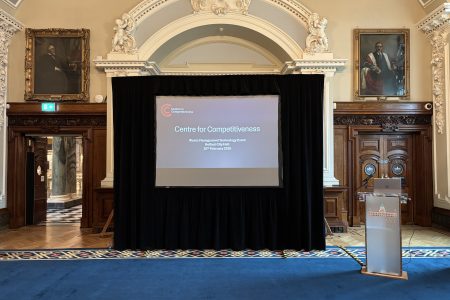
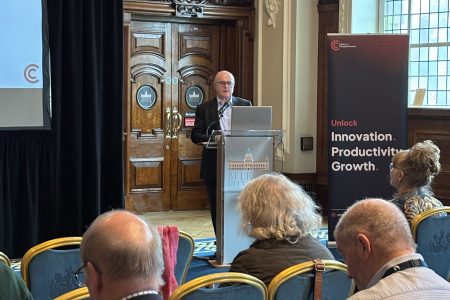
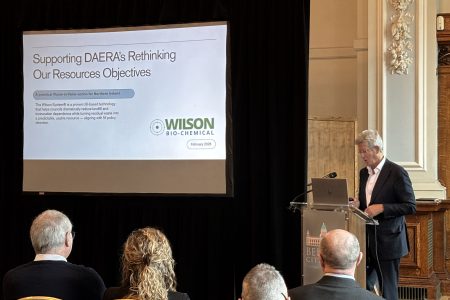
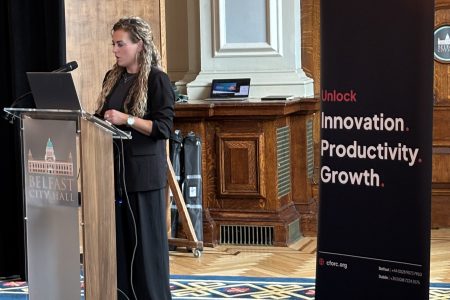
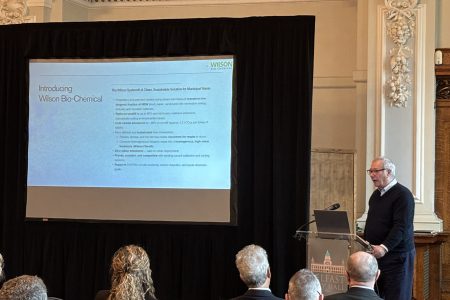
Senior representatives from Northern Ireland’s councils, officials from DAERA and other government officials gathered at Belfast City Hall today for a strategic briefing on emerging Waste-to-Value technology.
The session was convened by the Centre for Competitiveness (NI) in collaboration with Mark Ennis (former Chair of Invest NI) and brought together senior local government executives to examine potential alternatives to landfill and mass-burn incineration.
Introducing the Wilson System®
The technology presented by Wilson Bio Chemical is the Wilson System®, an advanced steam autoclaving process designed to treat unsegregated municipal solid waste. The system converts the biogenic fraction of municipal waste – including food waste, paper and cardboard – into a sterilised, energy-rich feedstock known as Wilson Fibre®. This material can be used in renewable energy generation and the development of second-generation bio-products.
Wilson Bio-Chemical positions the system as a scalable Waste-to-Value solution supporting circular economy objectives through sustainable resource recovery.
A Timely Discussion for Northern Ireland
With over one million tonnes of municipal waste generated in Northern Ireland in 2024–25, and the Department of Agriculture, Environment and Rural Affairs’ recent consultation on “Rethinking our Resources”, the discussion took place at a significant moment for waste policy and infrastructure planning.
The session explored how advanced processing technologies could potentially:
– Reduce reliance on landfill
– Lower carbon emissions
– Improve environmental and public health outcomes
– Generate measurable economic value for local and regional communities
The event provided an opportunity for council leaders to consider operational, environmental and economic dimensions of next-generation waste infrastructure.
Collaboration Supporting Sustainable Innovation
Commenting on the collaboration, Mark Ennis said:
“Working with the Centre for Competitiveness has been instrumental for Wilson Bio Chemical in understanding the unique opportunities in Northern Ireland. Their expertise in convening public and private sector partners and their commitment to sustainable innovation have helped us connect with key stakeholders and explore how our Waste to Value technology can contribute to addressing the region’s waste challenges.”
As a practical delivery partner, the Centre for Competitiveness continues to create platforms that connect global innovation with regional opportunity – supporting informed decision-making and strengthening Northern Ireland’s long-term competitiveness through sustainable solutions.